Progressive Poker Power Plays: Max Bets on Jacks-or-Better Machines Multiplied Modest Bankrolls into Jackpot Goldmines
Progressive Poker Power Plays: Max Bets on Jacks-or-Better Machines Multiplied Modest Bankrolls into Jackpot Goldmines
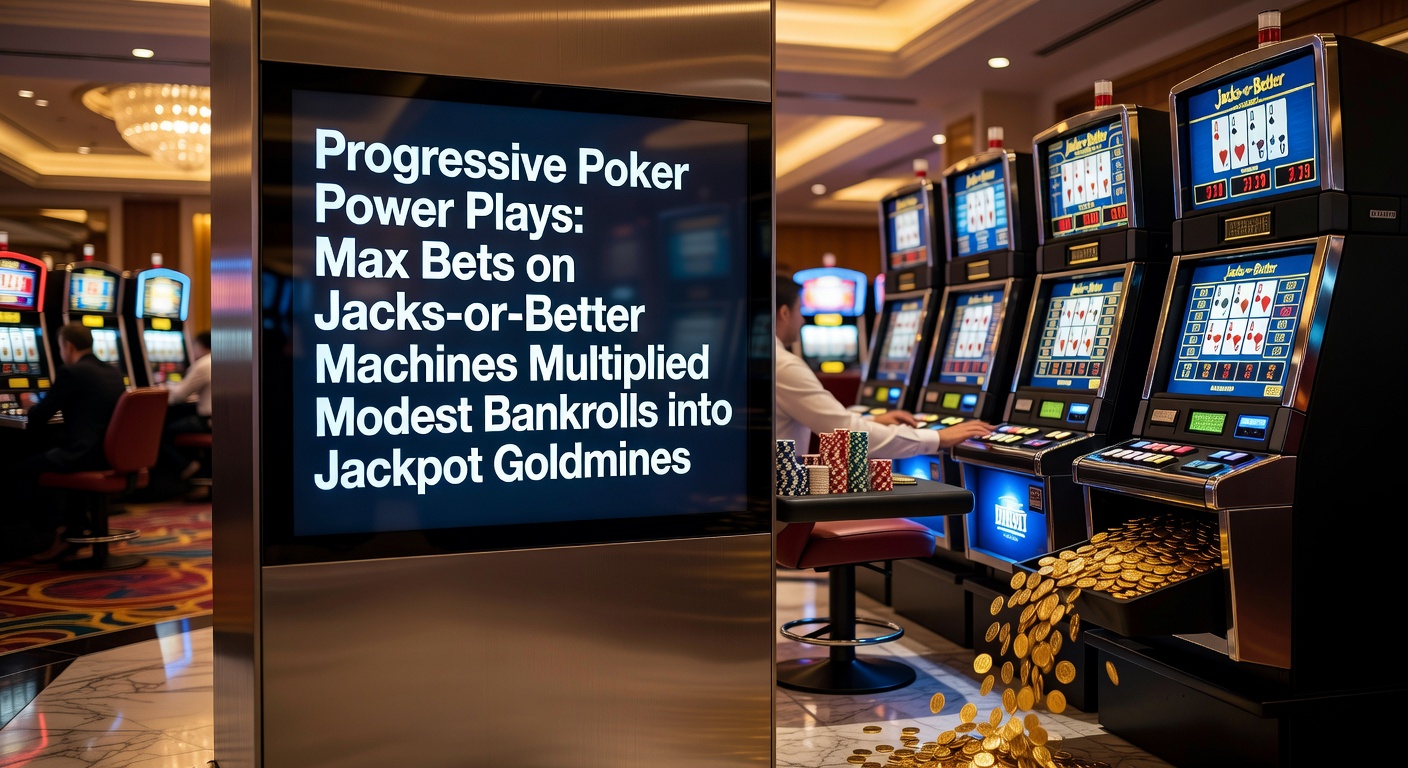
Players at casinos worldwide have turned modest starting funds into life-changing sums through strategic plays on Jacks or Better video poker machines featuring progressive jackpots, where max bets unlock the potential for royal flush windfalls that multiply bankrolls exponentially; these setups, common in places like Las Vegas and Atlantic City, reward persistence and precise wagering, as data from gaming floors reveals patterns of small-stake grinders hitting million-dollar pots after hours or days of disciplined action.
What's interesting about these machines lies in their blend of skill and luck, since Jacks or Better demands decisions on which cards to hold after the initial deal, while the progressive element ties massive payouts to full five-coin bets; observers note how this combination draws in savvy players who treat the game less like pure chance and more like a calculated investment, especially when jackpot meters swell beyond break-even thresholds.
The Mechanics of Jacks or Better and Why Max Bets Matter
Jacks or Better, a staple of video poker since the 1980s, deals five cards from a standard 52-card deck, allowing players one draw to replace unwanted cards and form the best possible hand; payouts kick in at a pair of jacks or higher, scaling up through two pair, three of a kind, straights, flushes, full houses, four of a kind, straight flushes, and the elusive royal flush, with paytables varying by machine but "full pay" versions offering 9-for-1 on full houses and 6-for-1 on flushes for optimal returns.
But here's the thing: progressive jackpots supercharge those top hands, particularly royals, by linking meters that grow with each max bet placed across a bank of machines; data indicates that betting fewer than five coins disqualifies players from the progressive portion, leaving them with fixed payouts that pale in comparison, so those chasing goldmines always coin up fully, often at quarter or dollar denominations to balance volatility with accessibility.
Strategy charts, refined over decades by experts, guide holds based on dealt cards, boosting return-to-player rates to 99.54% on full-pay machines with perfect play; yet progressives tip the scales further when the meter exceeds certain levels, making the effective RTP over 100%, a rare casino scenario where long-term math favors the player, although variance means dry spells test even the steadiest bankrolls.
Progressive Jackpots: From Seed to Jackpot Explosion
These jackpots start at a base "seed" amount, say $10,000 for a royal, then increment with contributions from max bets—typically a portion of each wager funneled into the meter—creating networked pools that span multiple machines or casinos; in high-traffic spots, meters climb rapidly, sometimes hitting $500,000 or more before a hit, drawing crowds who monitor displays like hawks waiting for the opportune moment.
Turns out, the key power play involves timing entries when the progressive value surpasses the "meter break-even," a calculated threshold where expected value turns positive; researchers at the UNLV Center for Gaming Research have analyzed these dynamics, showing how meters above $1,200 on quarter machines shift odds decisively, turning a modest $500 bankroll into a viable shot at six figures through sustained max betting.
Notable Wins: Real Stories of Bankroll Multiplications
Take the 2015 case at the Golden Nugget in Las Vegas, where a local player nursing a $200 roll fed quarters into a progressive Jacks or Better bank, hitting a $712,000 royal after 14 hours of grinding; security footage captured the moment, with the machine's lights flashing as the meter reset, proof that max bets on favorable paytables can transform pocket change into retirement funds almost overnight.
And then there's the anonymous Canadian visitor in 2022 at the Fallsview Casino in Niagara, starting with CAD $1,000, who max-bet dollars for two days straight before drawing the royal flush that topped $1.2 million, a payout documented in casino records and celebrated in player forums; such stories, while rare—royals occur roughly once per 40,000 hands on average—highlight how disciplined play amplifies modest stakes.
People who've studied these hits point to patterns: winners often arrive with 200-500 times the single-hand bet as a bankroll, play full-pay progressives exclusively, and walk when meters drop post-hit or fatigue sets in; one Atlantic City regular, tracked in a 2020 report by the Nevada Gaming Control Board analogs, parlayed $300 into $39,000 via a straight flush progressive before cashing out, demonstrating incremental multiplications along the way.

Now, as March 2026 unfolds, Las Vegas floors buzz with elevated progressives amid post-pandemic tourism surges; figures from Nevada regulators show average royal meters at $850,000 across Strip properties, up 15% from 2025, while Australian casinos like those in Sydney report similar climbs per International Gaming Institute data, luring international players who jet in for short, high-stakes sessions on machines primed for explosion.
Bankroll Strategies That Fuel the Power Plays
Savvy grinders allocate bankrolls conservatively, often 300-500 units per session where a unit equals the max bet—$1.25 for quarters, say—allowing them to weather 10,000-hand droughts without busting; they scout for 9/6 paytables with juicy progressives, using apps to track meters in real time, and pair this with optimal strategy to minimize house edge during the wait.
Yet variance bites hard, since even perfect play faces swings of 1,000 units or more; those who succeed rotate machines within banks to spread risk, take breaks to maintain focus, and set win goals like doubling the roll before eyeing the royal, ensuring modest starts compound through smaller payouts while positioning for the jackpot killshot.
Experts observe how this approach multiplies funds gradually—pairs and flushes provide steady drips, two pairs and trips build momentum—until a four-of-a-kind or better accelerates the curve, all unlocked only by those unwavering max bets that feed the beast.
Risks and Realities on the Casino Floor
Although progressives promise goldmines, data underscores the grind: average sessions last 20,000 hands for a royal shot, demanding hours and hundreds in action; figures reveal 98% of play returns to the house long-term absent a hit, so players hedge with session limits and comp tracking to offset costs.
Regulators in places like Ontario's iGaming sector note rising progressive participation since 2024, with audits confirming fair metering but warning of addiction risks for overextended bankrolls; still, winners emerge weekly, their stories rippling through communities where max-bet discipline separates dabblers from dynamos.
It's noteworthy that mobile and online variants now mirror these mechanics, with platforms licensed by bodies like the Malta Gaming Authority offering networked Jacks or Better progressives; players access them from home, max-betting virtual coins while meters sync globally, extending the power play beyond physical floors.
Conclusion
Progressive Jacks or Better stands as a testament to how max bets transform humble bankrolls into jackpot hauls, blending skill-driven decisions with escalating pots that reward the persistent; from Vegas marathons to Niagara triumphs, documented wins prove the formula works when players stick to full-pay hunts, optimal holds, and measured stakes.
So as meters climb into 2026, those eyeing the next multiplication scout wisely, bet maximally, and play patiently; the math supports it when conditions align, turning everyday gamblers into goldmine architects one royal at a time.