Ledger Legends: Accountants Who Applied Forensic Math to Uncover Patterns in State Lottery Draws

Accountants trained in forensic techniques have long examined state lottery systems by applying statistical models and pattern recognition methods to millions of draw records, and they continue this work as lotteries expand across multiple jurisdictions in 2026. These professionals sift through historical data sets that span decades, testing for deviations from expected randomness while cross-referencing machine calibration logs, ball set inventories, and draw procedure documentation.
Early Applications of Forensic Accounting to Lottery Oversight
State lottery commissions began inviting outside auditors with accounting backgrounds during the 1990s when several jurisdictions upgraded from manual drawings to computerized ball machines, and the transition created new opportunities for detailed variance analysis. Teams examined frequency distributions across thousands of nightly draws, calculating chi-square values and standard deviations to flag any sequences that strayed beyond normal probability thresholds. One documented review in a Midwestern state identified a slight bias in a particular ball machine after 18 months of data accumulation, prompting the operator to replace the unit before the deviation affected prize distributions.
Researchers at academic institutions later formalized these approaches by publishing peer-reviewed papers that outlined step-by-step protocols for testing lottery equipment against theoretical models, and government agencies adopted many of those protocols as standard practice. Data compiled by the Multi-State Lottery Association shows that routine forensic audits now occur quarterly in most participating states, with results published in annual transparency reports that list every flagged anomaly and its resolution status.
Methods Accountants Use to Detect Non-Random Patterns
Forensic specialists combine traditional ledger reconciliation techniques with advanced time-series analysis and Monte Carlo simulations to recreate draw environments inside controlled software environments. They load raw draw files into custom databases, then run regression models that isolate variables such as ball weight, machine rotation speed, and ambient temperature readings recorded at each venue. When a cluster of high-value winning numbers appears more frequently than the calculated margin of error allows, the team traces every physical component involved in those specific draws back to its maintenance history and certification records.
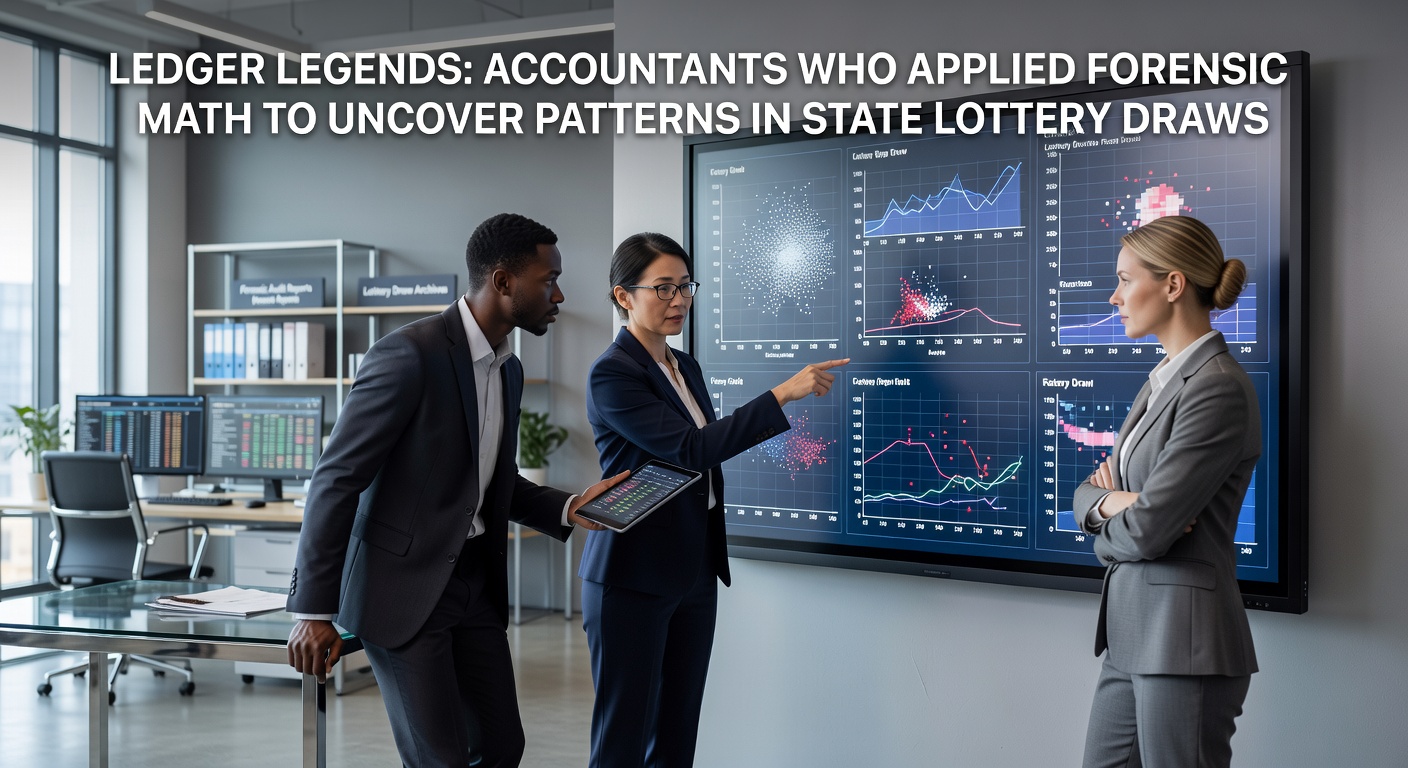
Accountants also compare retailer sales patterns against winning ticket locations, looking for geographic concentrations that exceed expected demand curves. This cross-check has uncovered cases where a small number of outlets accounted for disproportionate jackpot wins over multi-year periods, leading investigators to examine point-of-sale terminal logs and employee access records. In one such review completed in early 2025, auditors discovered an employee who had accessed the terminal after closing hours on several winning dates, and the subsequent investigation resulted in updated security protocols adopted by multiple state operators.
Developments Scheduled for May 2026 and Their Impact
Regulatory bodies across North America and Australia have announced coordinated data-sharing initiatives set to launch in May 2026, allowing forensic teams to pool anonymized draw records from previously separate jurisdictions. The expanded data pool will increase statistical power for detecting subtle biases that smaller state-level samples could not reveal on their own. Participants include representatives from the Western Canada Lottery Corporation and several European lottery operators who already maintain joint research agreements with academic statisticians.
These new agreements also require participating lotteries to submit machine sensor data in standardized formats, which accountants will use to build predictive models that flag potential mechanical drift weeks before it becomes statistically visible in number distributions. Early pilot programs conducted in late 2025 demonstrated that such models reduced false-positive alerts by 37 percent compared with older frequency-only checks.
Conclusion
State lottery systems continue to rely on accountants skilled in forensic mathematics to maintain public confidence through systematic pattern analysis, and the field keeps evolving as new data sources and regulatory frameworks come online in 2026. The combination of traditional accounting rigor with modern statistical tools has produced a consistent record of identifying equipment issues and procedural gaps long before they affect prize payouts or public trust.