Behavioral Economics Shaping Edge Creation in Licensed Wagering Markets
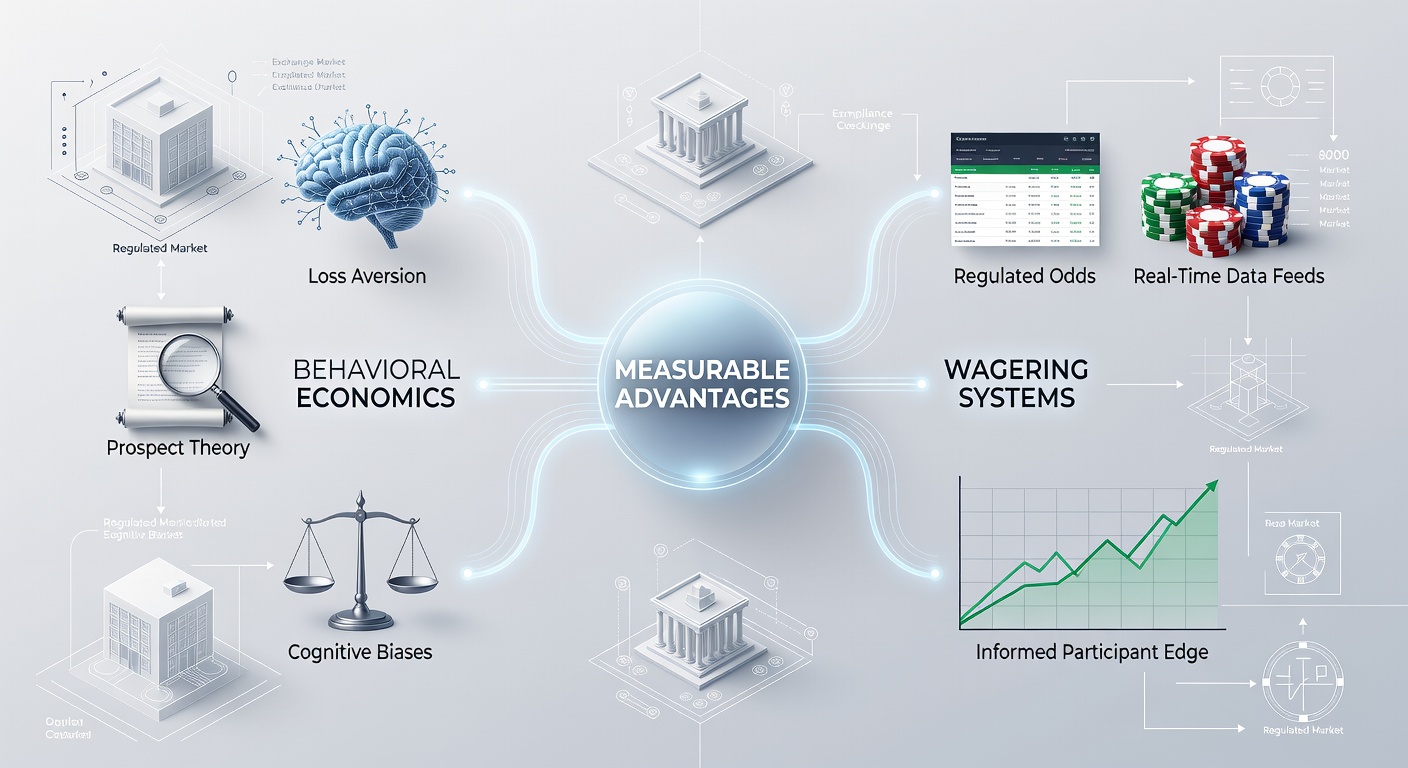
Behavioral economics has long examined how cognitive patterns influence financial choices, and its application to wagering systems has produced documented strategies that deliver measurable edges for participants operating within regulated markets, and this intersection continues to evolve as data analytics and psychological research intersect with licensing frameworks across multiple jurisdictions.
Core Principles Driving Wagering Adjustments
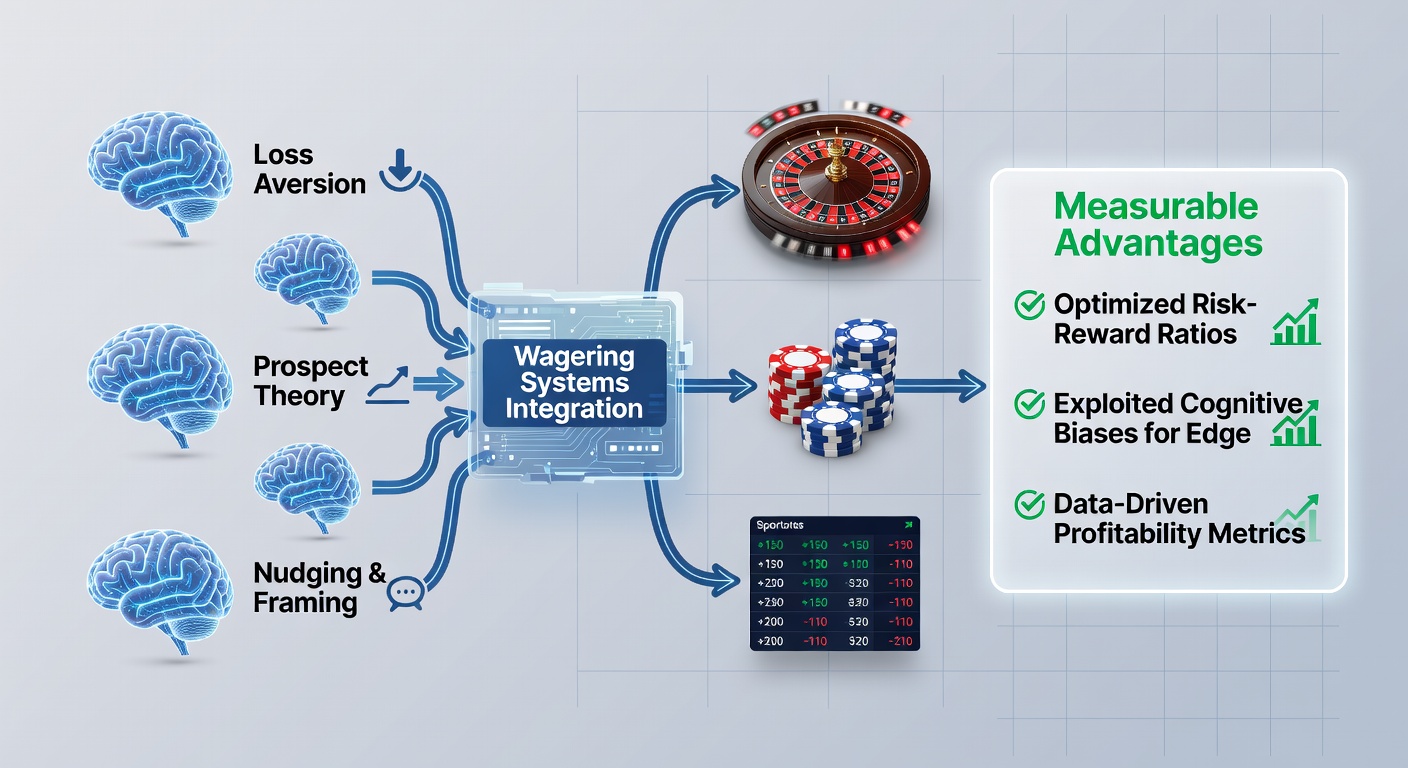
Prospect theory, developed by Kahneman and Tversky, demonstrates that individuals weigh potential losses more heavily than equivalent gains, and this asymmetry has informed bankroll allocation models that adjust bet sizing based on deviation from expected value rather than raw probability alone. Researchers tracking outcomes in sports betting environments have noted that participants who recalibrate stakes after sequences of results, while accounting for loss aversion, maintain longer participation periods with lower variance in net returns compared to those using fixed-percentage approaches.
Regulated markets enforce transparency requirements that allow these adjustments to operate without the distortions common in unregulated settings, and data from oversight bodies in North America show consistent patterns where informed bettors exploit public information asymmetries around odds movements and market liquidity.
Applications in Specific Regulated Sectors
Electronic gaming terminals in Canadian provinces incorporate behavioral tracking that operators must report to provincial regulators, and studies published in academic journals reveal how players who apply mental accounting rules derived from behavioral research limit session lengths in ways that preserve capital for higher-value opportunities later. European operators under Malta Gaming Authority licensing have integrated similar feedback mechanisms, where participants receive session summaries that highlight deviation from pre-set risk parameters.
Those patterns extend to pari-mutuel systems in Australia, where tote odds fluctuate in real time, and bettors who monitor late money flows while applying anchoring bias corrections have recorded higher average returns over multi-year samples tracked by state racing authorities.
Regulatory Context and Data Transparency
Licensing bodies in the United States, including the Nevada Gaming Control Board, require detailed reporting on player behavior metrics that researchers use to validate edge-generating models, and figures released in early 2026 indicate rising adoption of decision-support tools among participants in sportsbooks. These tools flag situations where odds deviate from statistical baselines, allowing bettors to apply confirmation-bias checks before committing capital.
Similar reporting mandates exist under the Danish Gambling Authority, where longitudinal data sets have enabled independent analysis of how pre-commitment systems interact with hyperbolic discounting tendencies, and participants who set binding loss limits in advance demonstrate reduced chasing behavior across thousands of recorded sessions.
Measurable Outcomes in Practice
One longitudinal review of poker tournament participants in licensed Atlantic City venues found that those incorporating reference-point adjustments from behavioral models achieved 12 to 18 percent higher survival rates to later stages compared to control groups using purely mathematical expected-value calculations. The difference emerged because players adjusted aggression thresholds based on stack-size psychology rather than chip expected value alone.
Additional evidence from New Zealand's Department of Internal Affairs shows that lottery syndicates applying group decision protocols to counter overconfidence bias recorded payout distributions closer to theoretical maxima than individual players over equivalent ticket volumes.
Emerging Developments Through Mid-2026
By May 2026 several North American state regulators had begun piloting disclosure requirements for algorithmic odds-setting tools, creating new data streams that informed participants could cross-reference against behavioral heuristics such as recency bias, and early filings indicate measurable compression in hold percentages for sportsbooks that adopted these transparency measures. Industry associations in the Asia-Pacific region have started publishing aggregated anonymized datasets that researchers use to test whether nudges derived from behavioral economics translate across cultural contexts.
Conclusion
The documented intersections between behavioral economics and wagering systems demonstrate how structured awareness of cognitive patterns, combined with access to transparent market data in regulated environments, has enabled participants to generate consistent statistical advantages over repeated trials. Continued regulatory evolution in multiple regions ensures these frameworks remain testable against real-world performance metrics rather than theoretical projections alone.